Diwali 2026 loan app scams: how fake instant credit turns into blackmail
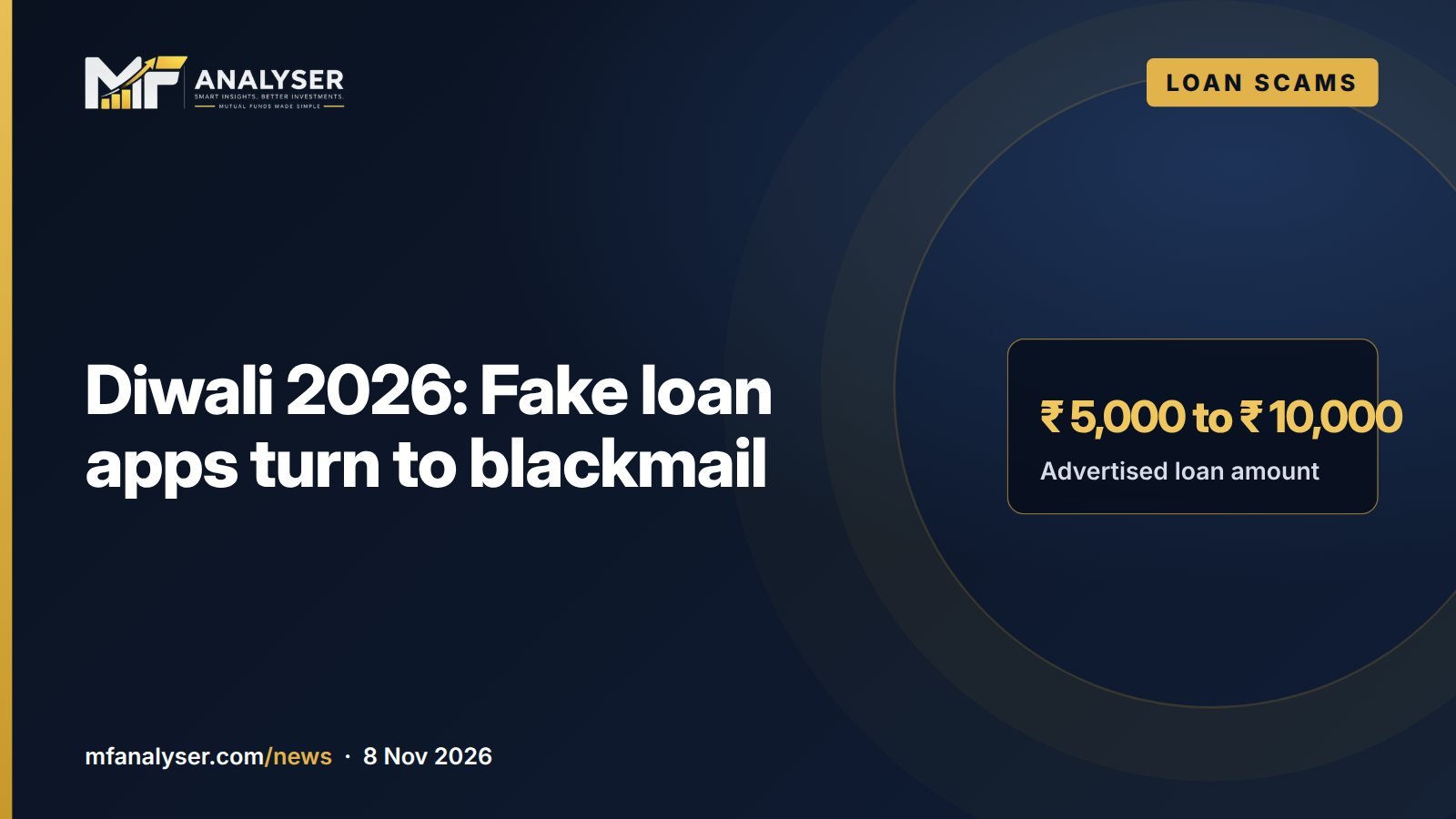
Mint reports that fake loan apps are luring young borrowers with instant loans of ₹ 5,000 to ₹ 10,000 this Diwali, then demanding inflated repayments and using personal data for blackmail. The real risk is not the loan amount but the data and permission trap.
For ordinary Indian investors, this is a personal-data and credit-hygiene risk rather than a market event, but it carries high consequences for young digital borrowers.
- Scamsters advertise instant loans of ₹ 5,000 to ₹ 10,000 via social media, SMS and WhatsApp, then demand repayments several times higher.
- Young borrowers in Himachal Pradesh are being targeted with blackmail using photographs, contacts and videos.
- The national cybercrime helpline is 1930, and victims can report through the official National Cyber Crime Reporting Portal.
As Diwali 2026 spending picks up, Mint reports that fraudsters are using fake loan apps to target young borrowers with instant credit offers, then demanding repayments many times the original amount and threatening those who refuse. The scam is less about the money lent and more about the personal data harvested, which we think makes it a serious personal-finance risk this festive season. (Source: Mint)
What happened
Scamsters advertise small instant loans of ₹ 5,000 to ₹ 10,000 using social media, SMS, and WhatsApp links. After the money is disbursed, they demand repayments several times higher than the initial loan amount. If the borrower refuses, the scamsters use the borrower's photographs, personal details, contact numbers and videos to threaten and blackmail them, according to reporting cited by Mint. Young borrowers, especially college students and recent graduates in Himachal Pradesh, are the main targets. (Source: Mint)
Our analysis
The trigger is the festive season itself. Diwali brings higher spending on gifts, clothes, chocolates and other items, and the rush for urgent funds makes people more willing to accept a quick, seamless-looking loan. Fraudsters exploit that urgency by offering tiny loan amounts that feel low-risk, but the actual product is the borrower's personal data, not the credit.
What stands out to us is how the scam flips the usual lending logic. A genuine lender earns interest and evaluates creditworthiness. These apps, by contrast, ask for complete access to contacts, photos, chats and messages, and then use that material as leverage. The source specifically notes that applicants should only approach RBI-regulated entities or banks, even if the interest rate is higher and the process is longer. The fact that fraudsters move from lending to blackmail signals that the loan is a data-harvesting trap rather than a financial product.
For ordinary savers and investors, the damage can spread beyond one loan. If a fake app gains access to bank-linked details or convinces a user to share passwords, OTPs or PINs, the result can be identity theft, credit score damage and ongoing harassment. No bank asks for such details, and the source is clear that banking passwords and OTPs must never be shared.
What this could mean for you
- Young borrowers and students may be the first to face unsolicited instant loan offers of ₹ 5,000 to ₹ 10,000; the real risk is that refusal leads to blackmail using personal photos and contacts. (Source: Mint)
- Festive shoppers facing a cash shortfall could see fake loan ads on WhatsApp or social media and mistake them for genuine credit; the rush for urgent funds is the vulnerability fraudsters exploit.
- Users who have already downloaded an unfamiliar loan app may have already allowed access to contacts, photos and messages; that data can be used to threaten or harass them later.
- Anyone who receives threats or blackmail after a loan dispute can call the national cybercrime helpline at 1930 and preserve screenshots, transaction details and messages; such requests for passwords or OTPs are a red flag. (Source: Mint)
What to watch next
- Unsolicited loan offers on social media, SMS or WhatsApp, especially those promising instant approval without credit checks.
- Loan apps that demand full access to contacts, photos, chats or SMS, or those distributed as APK files outside official app stores.
- Repayment demands that far exceed the original loan amount, or threats involving personal data; both can be reported through the National Cyber Crime Reporting Portal.
Bottom line
Diwali loan scams show how easily urgent credit can turn into a privacy and blackmail trap, especially for young borrowers. In our view, the practical filter is whether the lender is RBI-regulated and whether the app asks for unnecessary data permissions.
Source: Mint — Diwali 2026: Beware of instant loan offers on WhatsApp and social media; 5 ways to avoid loan app scams today. This story was written by the MF Analyser News Desk with AI assistance and its figures were checked automatically against the original report. It is for education only and is not investment advice. Mutual fund investments are subject to market risks.