ITAT Surat: DVO report can undo stamp duty tax addition for land buyers
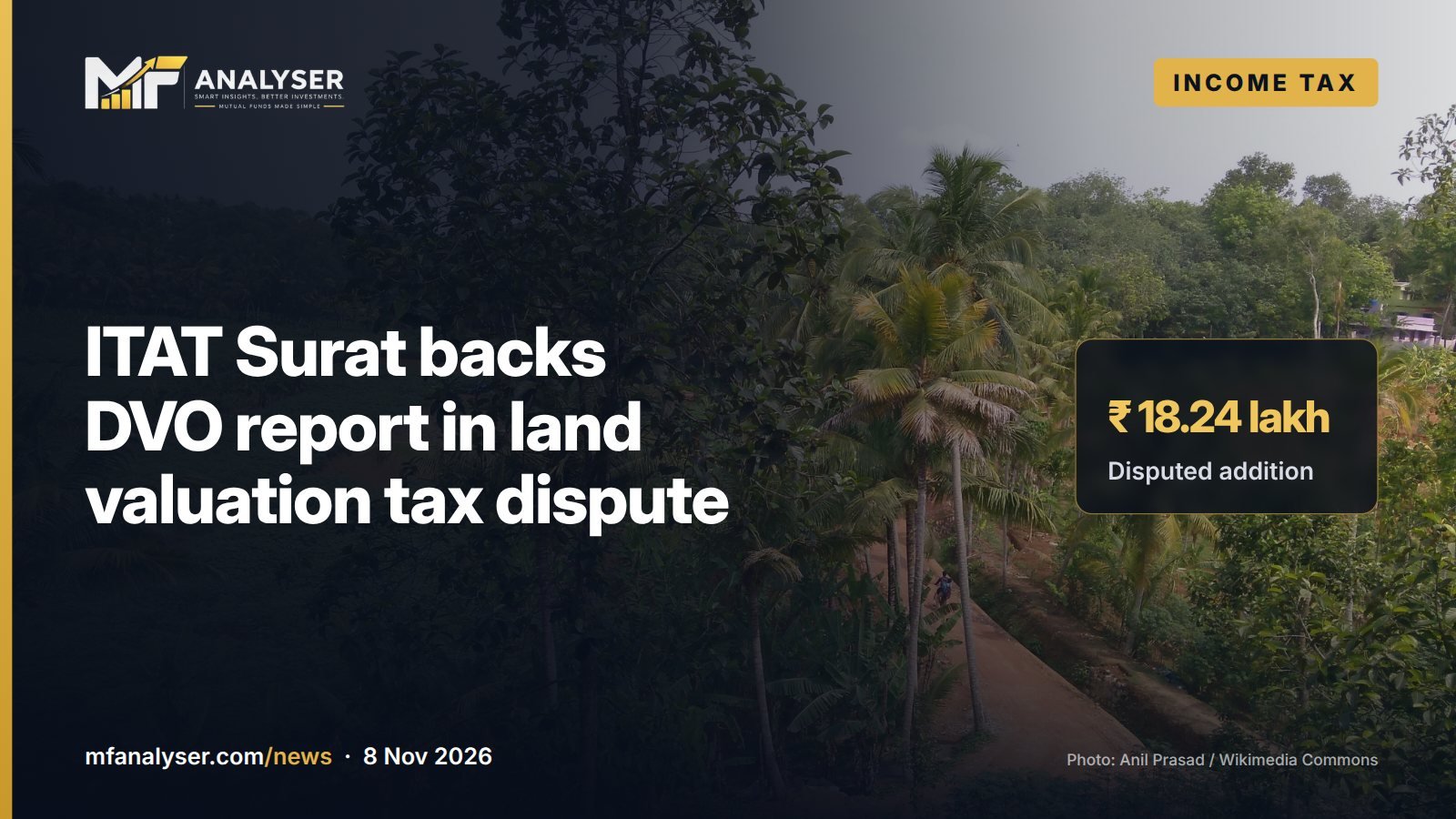
Mint reports an ITAT Surat ruling where a DVO valued land at ₹ 14.08 lakh against a ₹ 50.56 lakh stamp duty value, helping a farmer challenge a ₹ 18.24 lakh tax addition. We break down the land valuation dispute and what it signals for buyers.
Our read: the ruling strengthens the evidentiary role of the DVO report when tax authorities use stamp duty value to tax property purchases.
- ITAT Surat asked the Assessing Officer to consider the DVO report that valued the land at ₹ 14.08 lakh against a stamp duty value of ₹ 50.56 lakh.
- The tax addition of about ₹ 18.24 lakh was made under Section 56(2)(vii)(b) of the Income Tax Act, 1961.
- Stamp duty valuation may not be treated as final in income tax disputes if valuation evidence supports the purchase price.
A recent Income Tax Appellate Tribunal Surat ruling, covered by Mint, shows why a stamp duty valuation need not be treated as the final market value in income tax disputes. The case examines how a Departmental Valuation Officer’s report can matter when the tax department uses the gap between purchase price and government value to tax a land buyer.
What happened
According to Mint, a farmer named Desai and a co-owner bought agricultural land in Ratnagiri, Maharashtra, for ₹ 14.08 lakh. Stamp duty authorities valued the same land at ₹ 50.56 lakh, leaving a difference of ₹ 36.48 lakh. The tax department treated 50 per cent of this difference as Desai's share, about ₹ 18.24 lakh, and taxed it as income from other sources under Section 56(2)(vii)(b) of the Income Tax Act, 1961. (Source: Mint)
The Assessing Officer added ₹ 18.24 lakh to Desai's taxable income. On challenge, the matter was referred to a DVO, who assessed the land at ₹ 14.08 lakh. The appeal was initially dismissed on technical grounds due to delay, without examining the valuation report on merits. ITAT Surat, in its order dated 28 October 2026, held that the appellate authority could not simply disregard the DVO’s findings after referring the matter for valuation, and directed the Assessing Officer to consider the report and grant appropriate relief. (Source: Mint)
Our analysis
The tax issue arises from a deeming provision in the income tax law. When a buyer purchases property below the stamp duty value, the difference can be treated as income from other sources. But stamp duty value is an administrative benchmark, not proof of the actual price a willing buyer and seller would agree on. In our view, the case matters because it shows the department’s own valuation machinery can check that assumption.
The procedural angle is important. After the tax officer referred the valuation to the DVO, the DVO supported the buyer's purchase price. Yet the first appeal was rejected on a delay point, not on the valuation evidence. ITAT Surat’s direction indicates that once a DVO reference is made, its findings cannot be ignored merely because of a technical dismissal. That strengthens the evidentiary weight of the DVO report for taxpayers facing similar additions.
We see this as a positive signal for buyers in locations where government valuations run above actual transaction levels. The beneficiary is the taxpayer who maintains valuation evidence and asks for a DVO reference during assessment. The revenue department may lose some arbitrary additions, but the process becomes more evidence-based.
What this could mean for you
- Land buyers in areas with high stamp duty values may face a tax addition if the purchase price is below the government benchmark, but a DVO report can be a counterweight if it supports the actual price.
- Taxpayers who get Section 56(2)(vii)(b) notices may see better scope to challenge the addition when the department’s own DVO valuation agrees with the transaction value. (Source: Mint)
- Agricultural land purchasers may be drawn into income classification disputes; evidence such as comparable sale deeds and property condition records could become relevant if a valuation is questioned.
- First-time land buyers may need to understand that stamp duty valuation is not final for income tax, and a written objection during assessment is part of the process Mint describes for seeking a DVO reference.
What to watch next
- How assessing officers apply the ITAT Surat direction in similar cases where the DVO report differs from the stamp duty value.
- Whether appellate forums continue to reject DVO-based appeals on procedural delay grounds without examining the valuation report.
- Any wider application of this reasoning in property purchases where government valuations are set well above transaction prices.
Bottom line
In our view, the ruling reinforces that a gap between stamp duty value and purchase price need not automatically become taxable income. The DVO report, when properly considered, can materially change the outcome for a land buyer.
Source: Mint — Farmer wins ₹18.24 lakh land valuation tax dispute: How ITAT Surat relied on DVO report to grant relief. This story was written by the MF Analyser News Desk with AI assistance and its figures were checked automatically against the original report. It is for education only and is not investment advice. Mutual fund investments are subject to market risks.