Old Gold for New Jewellery: Six Checks Before You Accept a Jeweller's Valuation
Mint's guide shows how jewellers value old gold—purity, net weight, buying rate, deductions and documentation decide the real exchange value. Checking these before Diwali can reduce surprises.
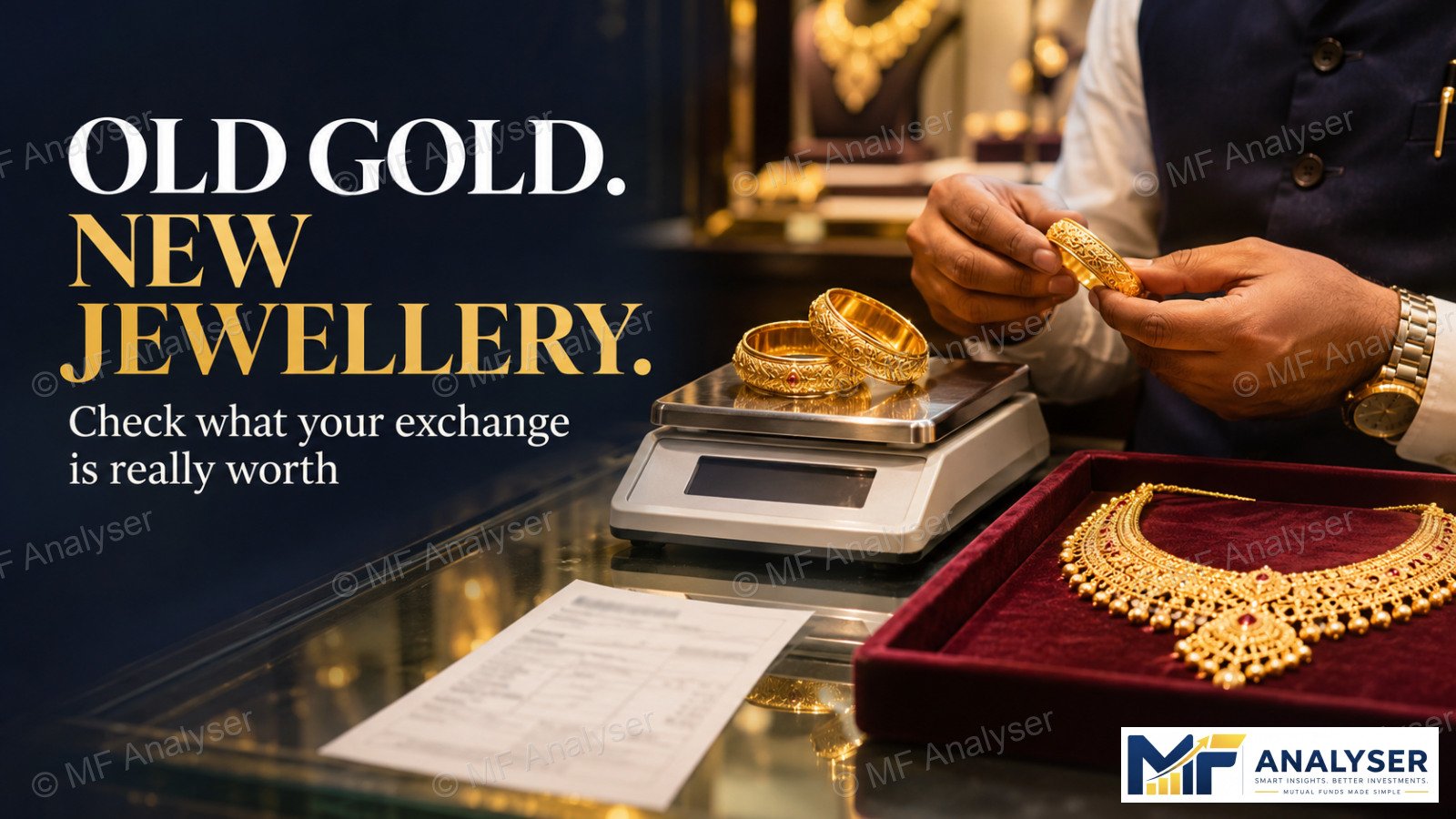
This is a reminder that an old-gold exchange is a negotiated valuation—not a direct market payout—so transparent arithmetic matters more than festive sentiment.
- Old gold exchange value depends on assayed purity, net gold weight after removing non-gold materials, and the jeweller's buying rate.
- Making charges paid when buying the original jewellery are generally not recovered in an exchange.
- A BIS hallmark establishes declared purity but does not guarantee the exchange price; written documentation is essential.
A Diwali-season guide from Mint, written by Kirti Jha, lays out the arithmetic behind exchanging old gold for new jewellery—and why the price you paid years ago has little bearing on what a jeweller will credit today. The exchange value depends on six checks: purity, net weight, buying rate, deductions, total cost of the new piece and written terms. Our read: this is a valuation exercise, not just a festive ritual.
What happened
Mint's report explains that jewellers value old gold based on its assayed purity, net gold weight after removing stones and other non-gold materials, and a separate buying rate that may differ from the selling rate for new gold. Deductions for melting, refining or processing can reduce the credit, and making charges paid on the original purchase are generally not recovered.
The guide's example: an ornament weighing 20 grams with 2 grams of non-gold material would be credited for only 18 grams; and if old jewellery receives ₹1.20 lakh while the new ornament costs ₹1.80 lakh before taxes, the buyer still pays the difference. Written documentation and BIS-compliant invoices matter. (Source: Mint)
Our analysis
At the heart of this is an information gap. A jeweller must refine old gold, bear valuation risk and still make a margin on the new ornament, so the buying rate for old gold and the selling rate for new gold are rarely the same. The difference, along with melting deductions, is effectively the cost of convenience.
A hallmark establishes the declared purity of an article, but Mint points out that it does not guarantee the exchange price. Buyers can verify the Hallmark Unique Identification through the BIS Care app, or use BIS-recognised Assaying and Hallmarking Centres for a chargeable test if they disagree with the jeweller's assessment. This is particularly relevant for older ornaments bought without a hallmark.
The biggest silent erosion often comes from studded jewellery. Gemstones, diamonds, enamel, lac and beads are generally excluded from eligible gold weight, and the gap between gross and net weight can be significant for wedding sets. Since making charges paid originally are not recovered, the exchange behaves more like a commodity credit for gold content than a resale of the original ornament.
What this could mean for you
- Households exchanging old gold this Diwali may see a lower credit than expected because purity, net weight and deductions are not the same as the old purchase price.
- Owners of studded or wedding jewellery could face a larger drop in eligible gold weight; Mint's 20-gram example, with 2 grams of non-gold material, cuts the eligible weight to 18 grams. (Source: Mint)
- Buyers comparing festive offers may find that an attractive old-gold valuation is offset by a lower per-gram buying rate or higher making charges on the new piece.
- Investors who treat gold jewellery as a financial asset may be surprised that making charges paid at purchase are generally not recovered. The exchange value primarily reflects eligible gold content.
What to watch next
- Whether jewellers disclose the per-gram buying rate for old gold separately from the selling rate for new gold, compared with the day's India Bullion and Jewellers Association benchmark.
- The BIS hallmark details can be cross-checked through the BIS Care app; BIS-recognised Assaying and Hallmarking Centres can test old gold on a chargeable basis.
- Some retailers may value hallmarked and unhallmarked jewellery differently; written exchange receipts and invoices provide the documentary record.
Bottom line
In our view, exchanging old gold for new jewellery is a negotiation over measurable details, not a sentimental handover. Jewellers have legitimate costs, but without a clear split of weight, rate and deductions, value can slip away silently.
Source: Mint — Exchanging old gold for new jewellery this Diwali? 6 things to check before accepting your jeweller’s valuation | Guide. This story was written by the MF Analyser News Desk with AI assistance and its figures were checked automatically against the original report. It is for education only and is not investment advice. Mutual fund investments are subject to market risks.