RBI Proposes Customer Controls to Disable UPI, Set Limits and Switch Cards On/Off
RBI’s draft electronic banking rules would let customers disable UPI and internet banking, set lower transaction limits, and switch cards on or off. Our read: a shift toward customer-level fraud control.
The draft marks a move toward empowering customers to control digital payment channels, though final rules and bank implementation will decide its real impact.
- RBI’s draft directions would let customers disable digital payment channels like UPI, internet banking and mobile banking.
- Customers could set lower transaction or daily limits within the bank’s overall channel cap.
- Card controls would cover on/off switches and limits for domestic, international, PoS, ATM, online and contactless use.
- Gift prepaid cards and transit prepaid cards are excluded from these card-specific directions.
The Reserve Bank of India has proposed a set of customer-facing controls for electronic banking that would let account holders switch off UPI, internet banking or mobile banking, set their own transaction limits, and turn debit and credit cards on or off. Mint reported the draft directions, which the RBI released as a way to give customers more direct tools against digital payment fraud. For anyone who uses these channels for daily banking or bill payments, the draft changes how digital risk can be managed.
What happened
RBI issued draft amendment directions titled ‘Preventive Safeguards for Electronic Banking Transactions (EBTs)’ on 23 November. The rules would cover commercial banks, small finance banks, payments banks, regional rural banks and cooperative banks. Banks would have to let customers disable one or more digital payment channels linked to an account. If a channel is disabled, the bank must block debit transactions through that channel until the customer re-enables it. (Source: Mint)
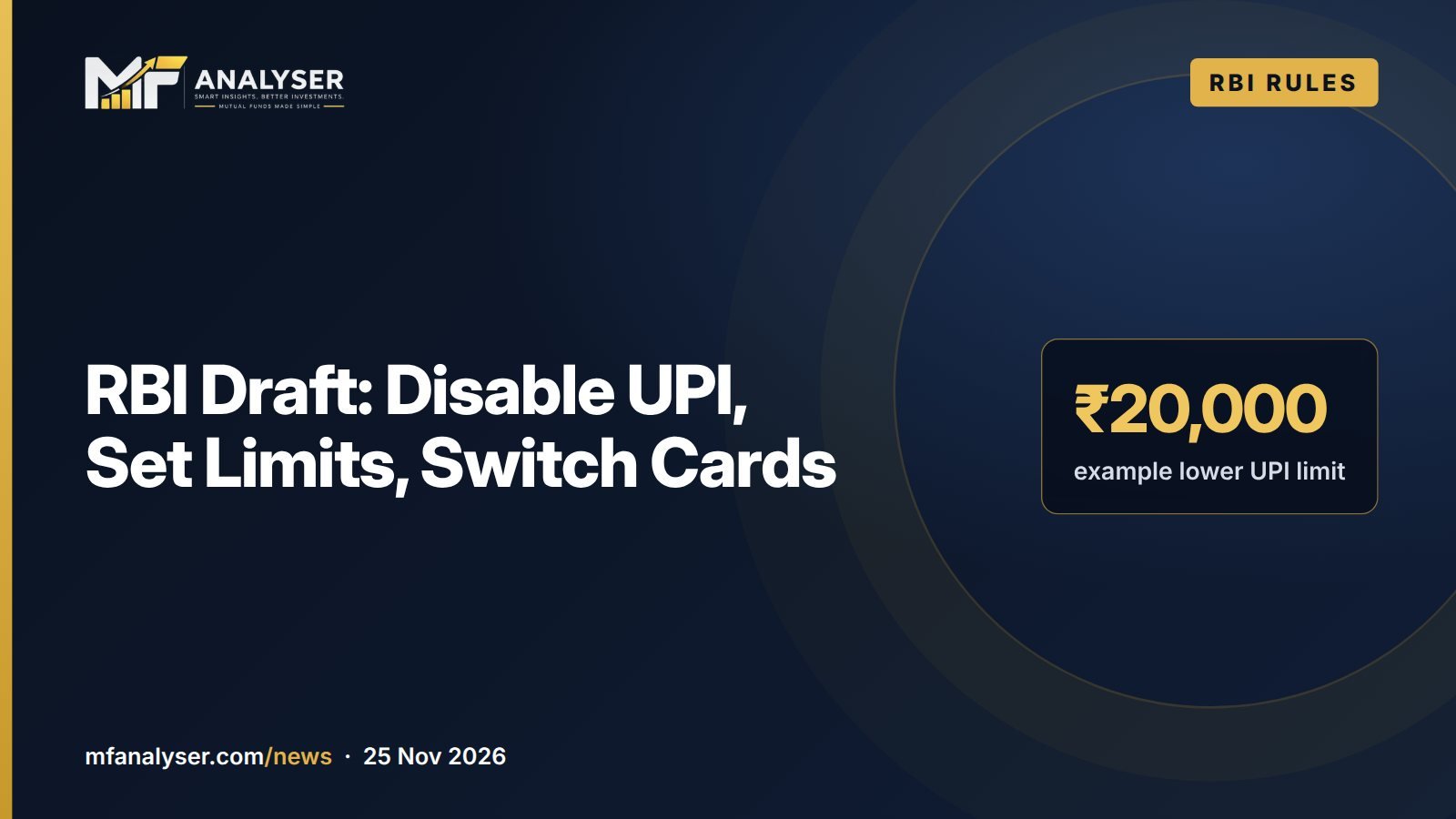
Customers could also set transaction and daily limits as long as those stay within the overall limits the bank already applies to the channel. For instance, if a bank allows a UPI cap of ₹1 lakh per transaction, a customer could choose ₹20,000, but could not raise it to ₹1.5 lakh. Cardholders would be able to switch a card off or on and set limits for domestic and international use across PoS terminals, ATMs, online transactions and contactless payments. Gift prepaid cards and transit prepaid cards are not covered. RBI has invited comments until 14 December 2026. (Source: Mint)
Our analysis
The draft marks a shift from controls that mostly sit with the bank to controls that customers can operate themselves. If a customer suspects unauthorised access or simply does not use a channel, turning that channel off creates an immediate block on debits until the customer authenticates and switches it back on. That authentication step, such as an OTP, adds friction that can interrupt fraud attempts.
The limit design is important because it works only within the bank's existing ceiling. A customer gets finer control, but cannot accidentally raise exposure beyond what the bank already allows. For banks, the operational task is significant: existing internet and mobile banking systems will need to support these toggles and limits. For customers, the trade-off is more settings to manage in exchange for a smaller fraud surface. The exclusion of gift and transit prepaid cards suggests the RBI is focusing first on mainstream deposit accounts and credit cards.
Because these are draft directions, the final rules may change after feedback. The direction of travel, however, is clear: customer-level switches and limits are becoming part of electronic banking safeguards.
What this could mean for you
- UPI users could keep UPI disabled during periods of non-use and re-enable it after authentication, which may reduce the chance of unauthorised debits if a mobile device or linked account is compromised.
- Debit and credit card holders may be able to turn off a card entirely or set lower limits for online, contactless, international or ATM transactions, potentially limiting losses if card data leaks.
- Customers who maintain several digital banking channels would have more granular control; channels they rarely use could remain off until needed instead of being open by default.
- Customers of small finance banks, payments banks and cooperative banks may also receive these facilities because the draft explicitly covers those institutions alongside commercial banks.
What to watch next
- The feedback window closes on 14 December 2026; final directions may change after comments from banks, fintechs and the public. (Source: Mint)
- Watch whether the final version keeps the exclusion of gift and transit prepaid cards or extends controls to them.
- After final rules, bank implementation timelines and mobile or internet banking updates will determine how quickly customers see these options.
Bottom line
The draft rules point toward stronger customer-level control over digital payment channels, though they are not final. If implemented broadly, they would give bank customers more direct ways to limit how and when digital payment channels can move money.
Source: Mint — RBI proposes digital payment safeguards: Explained – How customers can control UPI, switch off cards, set payment limits. This story was written by the MF Analyser News Desk with AI assistance and its figures were checked automatically against the original report. It is for education only and is not investment advice. Mutual fund investments are subject to market risks.