Travel drives LRS outward remittances to $3.2bn in September
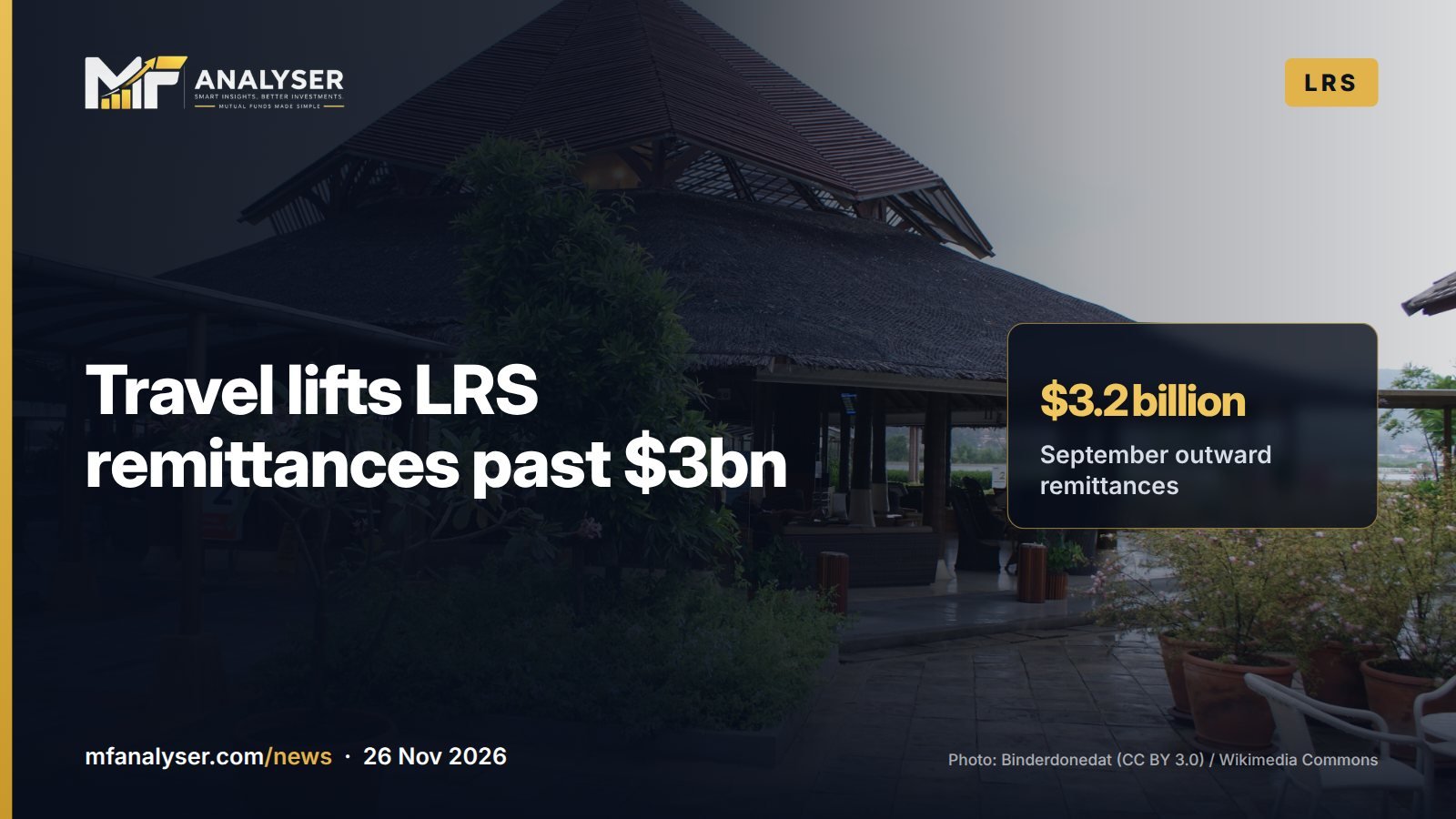
Outward remittances under the Liberalised Remittance Scheme reached a 24‑month high of $3.2 billion in September, driven by travel, indicating strong overseas spending by Indian residents.
- Impact
- Medium
- Topic
- SEBI & Policy
- Who it affects
- Travel‑related spenders · Foreign‑exchange market participants · Policy watchers
- Published
- 26 Nov 2026, 7:45 am IST
The record LRS outflow reflects robust travel‑related spending and may keep pressure on the rupee’s external demand side.
- Outward LRS remittances hit $3.2 billion in September
- Travel was the primary catalyst for the surge
- The level marks a 24‑month record
Outward remittances under the Liberalised Remittance Scheme climbed to a 24‑month peak of $3.2 billion in September, with travel identified as the main driver. (Source: Source)
What happened
In September the LRS recorded outward remittances of $3.2 billion, the highest level in two years. The increase is attributed primarily to travel expenditures. (Source: Source)
Our analysis
Travel‑related spending typically involves airline tickets, accommodation and ancillary services, all of which are settled in foreign currency. A rise in such outflows suggests that Indian residents are confident enough to spend abroad, indicating a rebound in discretionary consumption after a period of restriction.
From a macro perspective, higher LRS outflows increase the demand for foreign exchange, which can exert upward pressure on the rupee‑dollar rate if not offset by equivalent inflows. The trend also hints at a possible shift in the composition of external demand, moving from investment‑driven flows to consumption‑driven ones.
What this could mean for you
- SIP investors may see a modest impact on currency‑linked returns if the rupee experiences volatility.
- Travel‑related spenders could benefit from a broader range of foreign‑currency options as banks respond to higher demand.
- Foreign‑exchange market participants might observe tighter liquidity in the spot market, influencing pricing.
- Policy watchers should note the consumption‑driven nature of the outflow when assessing external sector health.
What to watch next
- Monthly LRS data for October to see if the travel‑driven surge continues.
- RBI’s foreign‑exchange policy statements for any adjustments to LRS limits.
- Trends in international travel bookings by Indian residents.
Bottom line
The September LRS outflow underscores a resurgence in overseas travel spending. Continued strength in this area could keep foreign‑exchange demand elevated, shaping short‑term rupee dynamics.
Quick answers
What happened?
Outward remittances under the Liberalised Remittance Scheme reached a 24‑month high of $3.2 billion in September, driven by travel, indicating strong overseas spending by Indian residents.
What does this mean for investors?
The record LRS outflow reflects robust travel‑related spending and may keep pressure on the rupee’s external demand side.
Who is affected?
Travel‑related spenders, Foreign‑exchange market participants, Policy watchers.
What are the key facts?
Outward LRS remittances hit $3.2 billion in September. Travel was the primary catalyst for the surge. The level marks a 24‑month record.
When was this published?
MF Analyser News published this on 26 November 2026 IST.
Primary source: Times of India · For education only, not investment advice. Mutual fund investments are subject to market risks.