ITAT Ahmedabad: REIT and InvIT dividends can remain tax-free if SPV stays outside Section 115BAA
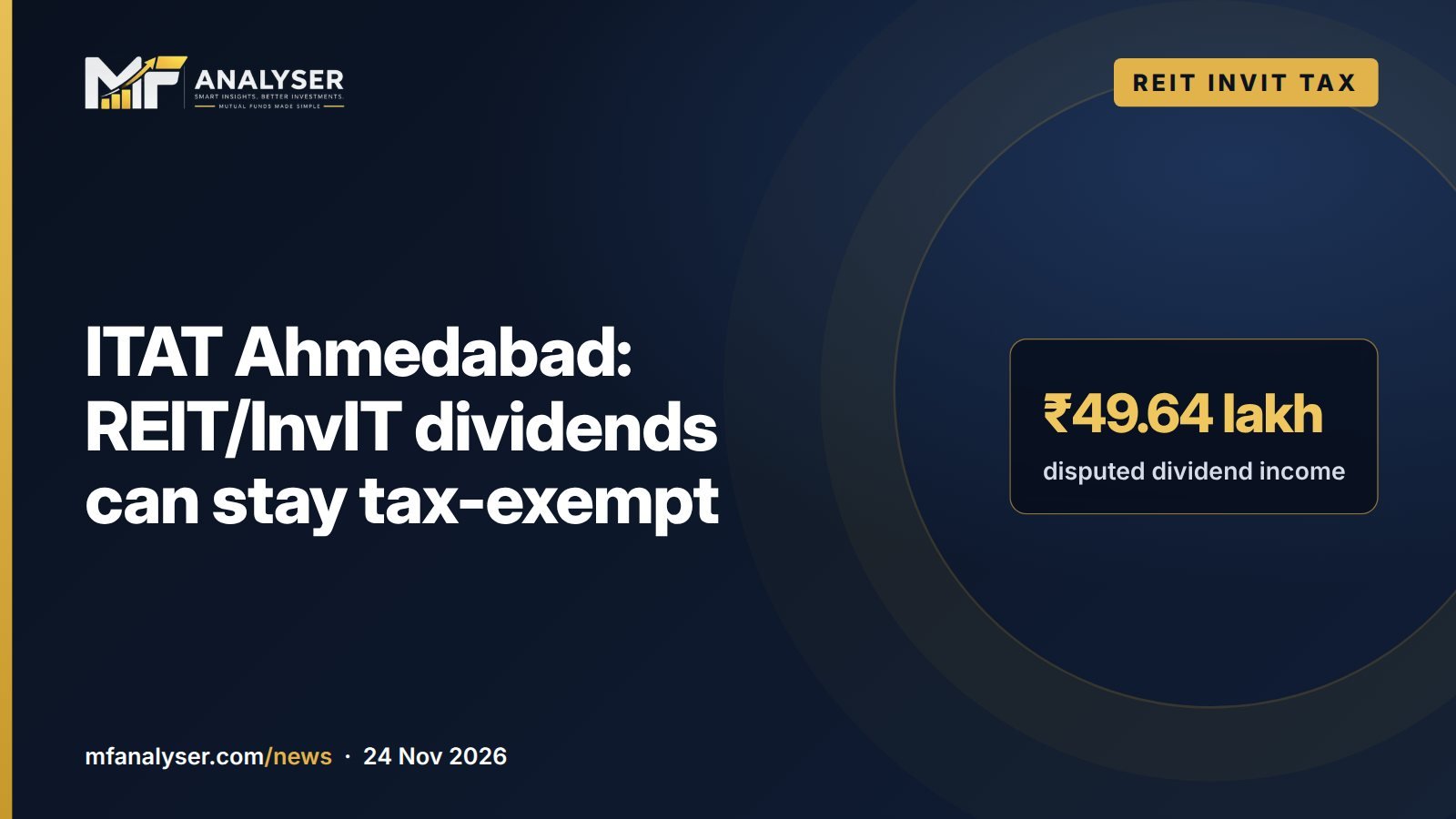
Mint reports that ITAT Ahmedabad has upheld a taxpayer's claim that ₹49.64 lakh of REIT and InvIT dividend income was exempt. The ruling clarifies the pass-through treatment when the underlying SPV has not opted for Section 115BAA.

The ruling sharpens the distinction between exempt dividend and taxable interest in business trust distributions.
- ITAT Ahmedabad ruled in favour of a taxpayer on ₹49.64 lakh of dividend income from REITs and InvITs.
- The exemption can apply when the underlying SPV has not opted for Section 115BAA.
- Form 26AS showed TDS only on the taxable interest component, not on the exempt dividend distributions.
Mint reported that the Ahmedabad bench of the Income Tax Appellate Tribunal has ruled in favour of a taxpayer on ₹49.64 lakh of dividend income from REITs and InvITs. The order brings more clarity to how pass-through income from business trusts is taxed when the underlying special purpose vehicle has not chosen the concessional corporate tax route under Section 115BAA. (Source: Mint)
What happened
The taxpayer, identified as Patel, had received ₹49.64 lakh as dividend income from SEBI-registered business trusts during the relevant financial year and treated the amount as exempt in her return for assessment year 2023-24. Her investments included Embassy Office Parks REIT, Mindspace Business Parks REIT and Powergrid Infrastructure Investment Trust. The assessing officer disagreed, added the amount as income from other sources, and the Commissioner of Income Tax (Appeals) upheld that view. ITAT Ahmedabad reversed the addition after examining Sections 10(23FD), 10(23FC), 115UA and 194LBA of the Income Tax Act. The order also referred to Section 194LBA(2A), which deals with situations where exempt dividend payouts do not attract tax deduction at source. (Source: Mint)
Our analysis
The core issue was not whether business trust dividends are always exempt, but how the exemption operates when the SPV has stayed in the normal tax regime instead of opting for the lower rate under Section 115BAA. The tribunal's reading is that in that situation, neither the business trust nor the unitholder faces tax on the dividend distribution, while interest portions distributed by the trust carry a different tax treatment. That distinction matters because REIT and InvIT distributions often bundle several kinds of income. (Source: Mint)
For investors, this case is a reminder that Form 26AS can already signal the intended tax treatment. Here, tax was deducted only on the taxable interest component and not on the dividend portion, which matched the taxpayer's claim. The assessing officer's attempt to tax the dividend as other income failed because the specific pass-through provisions override the general head of income. (Source: Mint)
The ruling does not create a blanket tax exemption for all trust distributions. It hinges on the underlying SPV's tax election and the nature of income; if the SPV had opted for Section 115BAA, the dividend treatment could differ. So unitholders need to look beyond the distribution label. (Source: Mint)
What this could mean for you
- REIT unitholders: dividend distributions may remain exempt if the underlying SPV has not opted for Section 115BAA, but interest portions are taxed differently. (Source: Mint)
- InvIT unitholders: the same pass-through logic applies, so the nature of each distribution component matters more than the trust's overall label.
- Investors with mixed REIT and InvIT income: checking Form 26AS for TDS on only the taxable component can help validate the tax position before filing. (Source: Mint)
- Taxpayers facing similar additions: this order may serve as a reference for disputes where business trust dividends were treated as other income, though each case will depend on the SPV's tax status.
What to watch next
- Whether tax authorities accept the ITAT Ahmedabad reasoning in similar assessments or appeal the order.
- Any CBDT clarification or amendment on the treatment of REIT and InvIT distributions when the SPV opts for Section 115BAA. (Source: Mint)
- How REIT and InvIT disclosures evolve for retail investors around the dividend and interest split in distributions.
Bottom line
ITAT Ahmedabad's ruling reinforces that the tax treatment of REIT and InvIT distributions depends on the character of the income and the SPV's tax election, not just on the fact that the money came from a business trust. For unitholders, the practical takeaway is that exempt dividend and taxable interest components need to be tracked separately rather than lumped together.
Source: Mint — REIT, InvIT dividend income tax-free? ITAT Ahmedabad rules in favour of taxpayer in ₹49.64 lakh tax dispute. This story was written by the MF Analyser News Desk with AI assistance and its figures were checked automatically against the original report. It is for education only and is not investment advice. Mutual fund investments are subject to market risks.